Clairet Lipide

Legendary Hip-Hop DJ, Funkmaster Flex, Gets Into Physical Altercation at NBA Game, Video Shows

· Vice

As we near the end of October each year, that means the NBA is back. The 2026-2027 season kicked off this week on Tuesday, October 20, 2026, with the defending champions taking on LeBron James and his new team, the Philadelphia 76ers. The defending champions, the New York Knicks, raised their championship banner above Madison Square Garden and received their rings ahead of the opening game. The first game of the season wasn’t the only excitement that occurred at the legendary venue on Tuesday.

Visit catcross.org for more information.

Funkmaster Flex is known for pioneering the first-ever hip-hop radio show in New York on Hot 97 in 1992. He attended the NBA tip-off game, posting his excitement to his Instagram story throughout the night. Early Wednesday morning, the DJ posted a video of the altercation on his Instagram from the night before. You know how these things go, though. It’s hard to tell what is going on from the poorly filmed videos. We have to rely on the video caption from Funkmaster Flex himself rather than the footage.

The New York DJ quickly defended himself on social media, sharing footage directly to his page. The caption reads, “Is this where I got punched in the face? Yeah right! I didn’t see that part!” Indeed, we didn’t see that part, as the video didn’t capture much.

View this post on Instagram

Funkmaster Flex Gives Little To No Context

Flex claims the other guy works for a record company, but doesn’t elaborate on this. He posted, “Is that record company guy upset? Isn’t he a guy that promotes records? You mad at me? Why you chase me like that, Shadow?” From this, it appears evident that the other man’s name or nickname might be Shadow.

Apparently, at one point, the two discussed the possibility of Flex suing the man. To this, Flex posted, “I did not say I was gonna sue! Why did Shadow say, ‘Hit me first so I can sue you?'” Funkmaster wrapped up his reactionary post with, “Why you say ‘I’m a broke n***a,’ you trying to get a money grab off me? You threw a drink at me? Thursday! 7 p.m.! Hot 97!”

In one angle of the fight, the legendary New York DJ can be seen wearing all black, dashing across the room towards someone. Then, the camera dips behind someone’s back out of view. At the end of this video, Funkmaster Flex winds up on the ground, but it’s unclear if that’s from the altercation or from the police and security guards that are now involved. After bringing the DJ to his feet, another video captures security and an NYPD officer attempting to shove the DJ out of the doorway as he continues to yell at the man.

On Thursday, at 7 p.m. ET on Hot 97 in New York, we’ll hear the legendary DJ tell the tale himself live on air. It’s sure to be one of his most memorable moments on air in the last 33 years of his career.

Photo by Astrida Valigorsky/Getty Images

The post Legendary Hip-Hop DJ, Funkmaster Flex, Gets Into Physical Altercation at NBA Game, Video Shows appeared first on VICE.
Read full story at source

Europe is in trouble, and it is blaming Muslims

· Al Jazeera

Madlanga commission told witness cannot disclose classified intelligence

· Citizen

Evidence leaders have argued that disclosing classified intelligence constitutes a criminal offence, while the media has warned against allowing intelligence agencies to dictate what information is revealed to the Madlanga commission.

The dispute centres on an application to have National Intelligence Co-ordinating Committee (NICOC) acting coordinator Ntandazo Sifolo testify behind closed doors, with evidence leaders arguing that his testimony involves sensitive information.

Visit extonnews.click for more information.

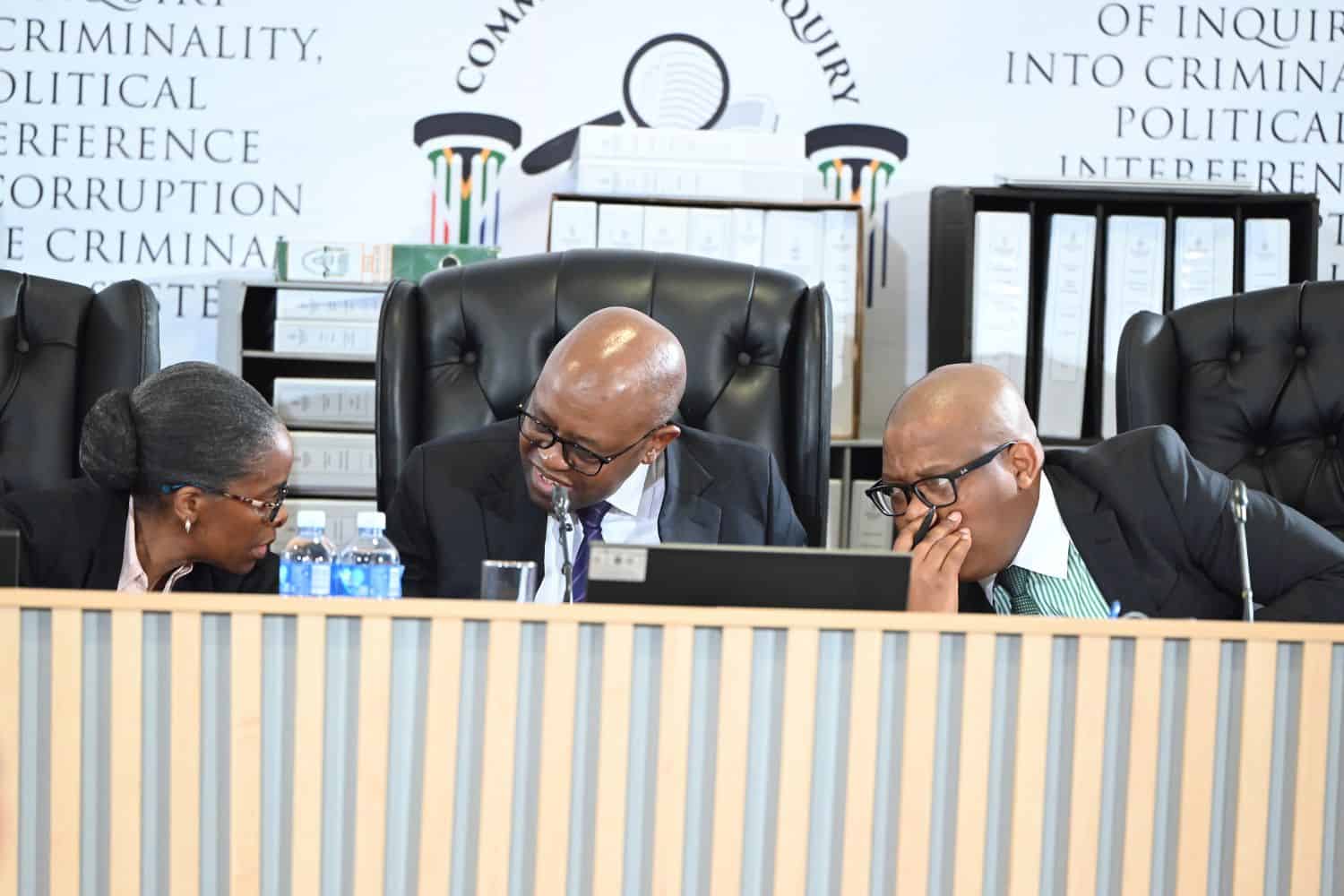
The matter came before the commission held at the Bridgette Mabandla Justice College in Pretoria on Wednesday, 21 October 2026, when proceedings briefly returned to the public domain to hear arguments from the evidence leaders and media representatives.

Media organisations – amaBhungane, News24 and Daily Maverick – oppose a ruling that would potentially be in favour of an in camera testimony, arguing that the public interest in the commission’s work cannot be sidelined by claims of confidentiality.

Sifolo heads NICOC, which brings together South Africa’s intelligence structures, including the South African Police Service’s (Saps) Crime Intelligence division and the State Security Agency (SSA).

Evidence leaders and media clash at Madlanga commission

Chief evidence leader Matthew Chaskalson told the commission that the dispute hinges on whether the inquiry has the authority to declassify documents linked to Sifolo’s testimony.

“There is a classification, and there are documents that have been entrusted to us expressly in confidence, not for further dissemination.

“The commission is not legally empowered to go behind that,” Chaskalson argued.

The advocate outlined three possible approaches.

The first would be for the commission to urgently approach the high court for an order allowing the documents to be declassified so that Sifolo could testify in public.

However, Chaskalson warned that pursuing this route could divert attention from the commission’s central mandate.

The second option would allow Sifolo to testify publicly while the documents remained classified.

He argued that this would restrict the commissioners’ ability to question the witness about the intelligence contained in the documents.

The evidence leaders’ preferred option is to conduct the testimony in camera, enabling the commissioners to question Sifolo on the classified material.

The media could subsequently approach the high court to obtain access to the proceedings’ record.

Chaskalson further argued that if the commission were to disclose classified information, it would be a criminal offence as outlined in law.

“These are very clear legal consequences.”

Media challenges the basis for closed proceedings

Advocate Ben Winks, representing the media organisations, challenged the reasoning behind the options presented to the commission, particularly the suggestion that a public hearing would prevent meaningful questioning of Sifolo.

“How it was put by my learned friend was that if the commission takes option two and refuses in camera – and I wrote down exactly what my learned friend said – which is that the commission would deprive itself of the opportunity to question Dr Sifolo, which frames this as though these documents and this testimony is a favour or a gift from Dr Sifolo or NICOC or the intelligence services,” he told the commission.

Winks argued that intelligence agencies should not be allowed to determine what a commission of inquiry may examine or disclose.

“It cannot be that any intelligence service can dictate to a commission post-1994 what we will and will not tell you.

“They can motivate and say this will jeopardise personal safety of an operative. This will jeopardise the viability of an operation.

“This will jeopardise our relationship with the CIA or with the MI6 or whomever, but it’s classified because we say so is not good enough,” the lawyer added.

Apartheid-era inquiry raised

To illustrate the risks of allowing intelligence agencies to control what they reveal, Winks referred to the Harms Commission, established in 1990 by then-president FW de Klerk to investigate politically motivated state assassinations of anti-apartheid activists.

He argued the inquiry was “widely acknowledged” by the Truth and Reconciliation Commission (TRC) as a “farce” because apartheid-era intelligence and security structures were permitted to dictate what information they would disclose.

“They appeared in ridiculous disguises and hid their identity of the witnesses.”

Winks also challenged the distinction drawn between making documents available for the commission’s work and releasing them to the public.

He contended that the commission’s purpose extended beyond receiving evidence behind closed doors, emphasising that its responsibility was to investigate matters, report its findings and make recommendations in the public interest.

“On whose behalf does the commission do this? Does it do so as an agent of the president?

“No, it does so as a protector, in a sense, or an investigator on behalf of the public.”

Read full story at source