America Needs Its Indian Immigrants
· The Atlantic
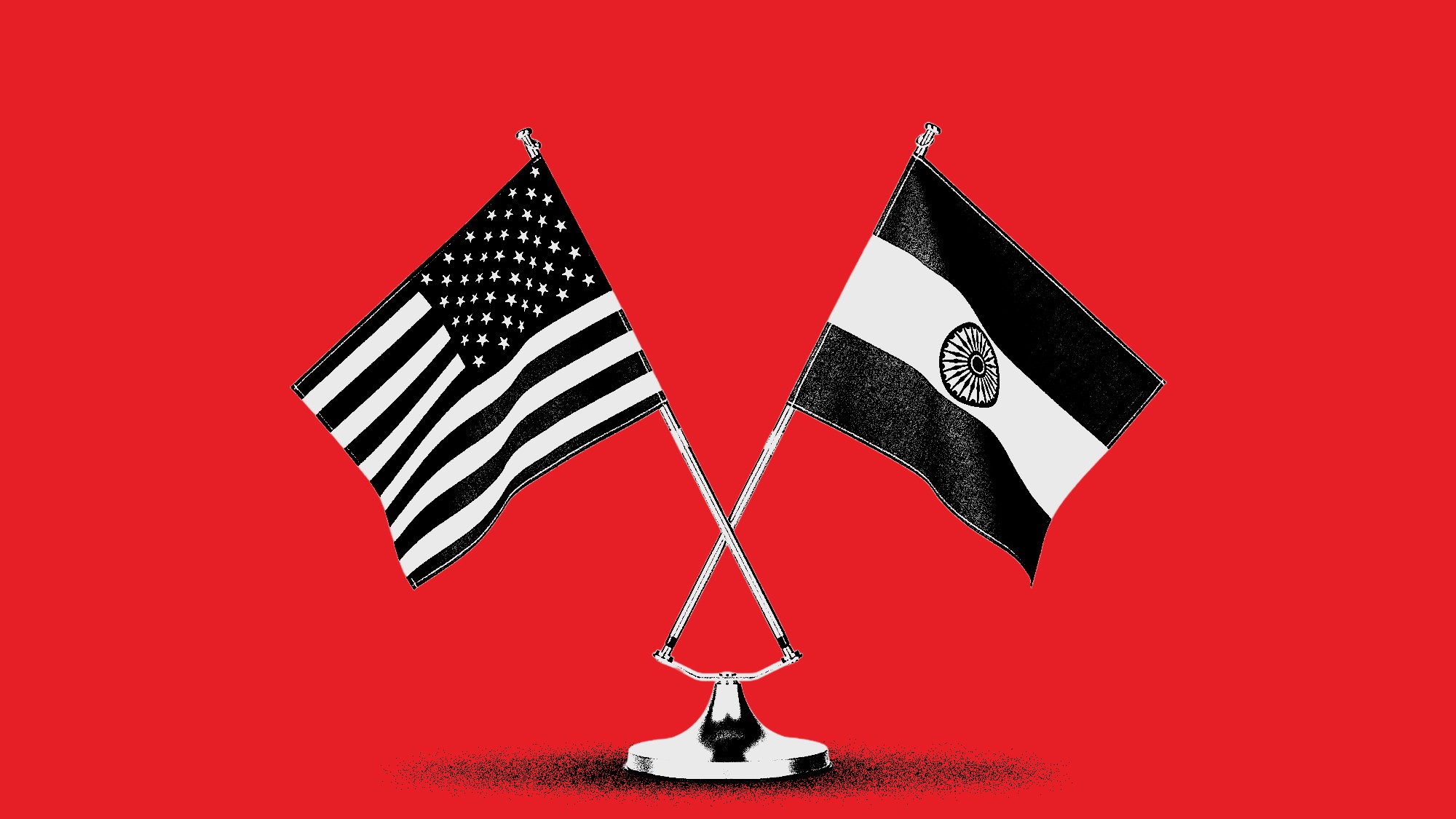
Ask many successful Indian CEOs, entrepreneurs, or scientists how they rose to prominence in America, and they will tell you that, grit and talent aside, the key factor was the country itself: an economy and a culture that rewarded merit and drew ambitious, talented people from around the world.
Indian Americans are among the most affluent and best-educated groups in the country. What distinguishes them from other immigrant groups is that they have risen to the top in one generation. Median household income for Indian Americans is $151,200, compared with $92,530 for white Americans. About three-quarters of Indian adults 25 and older in the U.S. hold a bachelor’s degree, against a national average of 38 percent. Nearly half have graduate degrees, and the poverty rate, 6 percent, is among the lowest of any ethnic group. Indian Americans tend to be employed and law-abiding.
Visit biznow.biz for more information.
For a community more accustomed to being called the “model minority” or “tech’s new titans,” a recent rise in anti-Indian rhetoric—now commonplace on sites and apps such as X, YouTube, and Reddit—has been a shock. According to Stop AAPI Hate, nearly half of South Asian adults living in America reported having been targeted in a “race-based hate act” in 2025 alone. From 2023 to 2025, the use of anti–South Asian slurs online surged by 109 percent. The Trump administration has also attacked immigrants coming from India with efforts to severely restrict the H-1B visa program, a legal pathway to American jobs; 70 percent of H-1B recipients are Indian. Despite two different judges blocking President Trump’s $100,000 fee for the visa, the administration claims that applications are down 92 percent at the largest IT-staffing and -outsourcing firms—a decline that it views as a massive success.
Indian immigrants have helped make this country great. America has long needed Indian immigrants, and it still does. But people who don’t understand the great contributions of Indian Americans would rather close the door, and are hostile to those who are already here.
By 1960, Europeans made up 75 percent of all immigrants in the U.S. By 2010, the balance had reversed, and Europeans were just 12 percent of all immigrants. According to U.S. Census Bureau data, in 1990 fewer than a million Indians were living in the U.S. A decade later, their numbers doubled because of a hiring spree for engineers to help avert a potential Y2K crisis. Today, some 5.2 million Indians reside in America, more than 60 percent of whom were born in India. Although they represent just 1.5 percent of the population, their sudden success has made them very visible—and that visibility has made them targets.
[Jonathan Chait: The mainstreaming of anti-Indian bigotry]
Indian-born executives are running several of the biggest technology companies, such as Google, Microsoft, IBM, and Adobe. They have been at the center of some people’s anger over AI and layoffs throughout the tech industry. In politics, the rise of Ro Khanna, Vivek Ramaswamy, Kamala Harris, and Zohran Mamdani has also caused online and real-life hate toward those with Indian heritage. For Americans uneasy about how the country is changing, seeing Indians in charge can feel more like a threat than a hopeful sign about the viability of the American dream.
Immigration politics have always been tangled up with discrimination. In the 1850s, the United States brought in cheap Chinese laborers to work its mines, farms, and railroads. When the economy shrank during the 1870s, the cry of “they’re taking our jobs”—familiar today—led to the Chinese Exclusion Act of 1882, which restricted Chinese immigration for the next 60 years. Japanese and, later, Korean workers met the same antagonism, and the Immigration Act of 1917, also known as the Asiatic Barred Zone Act, effectively shut out immigrants from most of Asia. The country went through a long period of xenophobia that targeted not only nonwhite immigrants but also “undesirable” white immigrants, such as Italians and Eastern European Jews. In 1910, the foreign-born population was 14.7 percent; by 1960, it had fallen to 5.4 percent.
In 1965, the Immigration and Nationality Act eased the old restrictions, in large part because the country was short of skilled labor, particularly in the STEM fields. Two developments drove the change.
The first was Sputnik. In 1957, the Soviet Union launched the first satellite into space. The U.S. military, fearful it was losing the Cold War, began investing heavily in science, sending large sums to top research universities. By the ’60s, the race had accelerated, but engineers were in short supply, so the country began recruiting overseas. Starting in 1950, India, in collaboration with foreign partners, had begun building world-class engineering schools called the Indian Institutes of Technology (IITs). Well-trained, English-speaking engineers began graduating just as the U.S. was desperate for them.
India had hoped that these engineers would help drive its own development, but it offered too few jobs, and the U.S. had found an ideal recruiting ground. Even today, the IITs remain fiercely selective, accepting less than 1 percent of roughly 1 million applicants per year. Sundar Pichai, the CEO of Google; Vinod Khosla, a venture capitalist and co-founder of Sun Microsystems; and Arvind Krishna, the CEO of IBM, are all IIT graduates. The first wave of Indian engineers was recruited after 1965. A second big wave came in the late ’90s, during Y2K preparations.
The second development was a need for doctors. In July 1965, President Lyndon B. Johnson signed the Medicare and Medicaid Act, and almost overnight, 20 million Americans became eligible for health care. Hospitals lacked the staff to cope. The Vietnam War was escalating, medical personnel were being sent to the front, and disabled veterans were returning home needing long-term care. Hospitals looked overseas, and India again supplied trained professionals to a strained system. Indian doctors were on the front lines of the AIDS epidemic in the ’80s and the coronavirus pandemic in the early 2020s.
[Meenakshi Ahamed: America has never really understood India]
The U.S. has benefited from the skills that Indians bring without having had to invest much in their education. Many have earned advanced degrees in America, but the bulk of their training happened in India. A more honest way to see it is that India, along with other poorer countries, has been subsidizing the United States.
Presidents like to define their eras with a slogan that conveys the legacy they hope to leave. John F. Kennedy called his the “New Frontier.” He was determined to win the Cold War and stop the spread of communism, and pushed the country toward space exploration while investing in science and technology. Johnson’s was the “Great Society.” His goal was to care for the elderly and the poor. Having known poverty firsthand, he wanted to extend health care to the vulnerable, and he signed both the Medicare and the Civil Rights Acts. Both of these presidents’ visions leaned on importing talent from abroad.
Trump’s slogan is “Make America Great Again.” Yet one of his lasting legacies may be that he turned his back on the very talent that helped make America great in the first place.